Waste Diversion
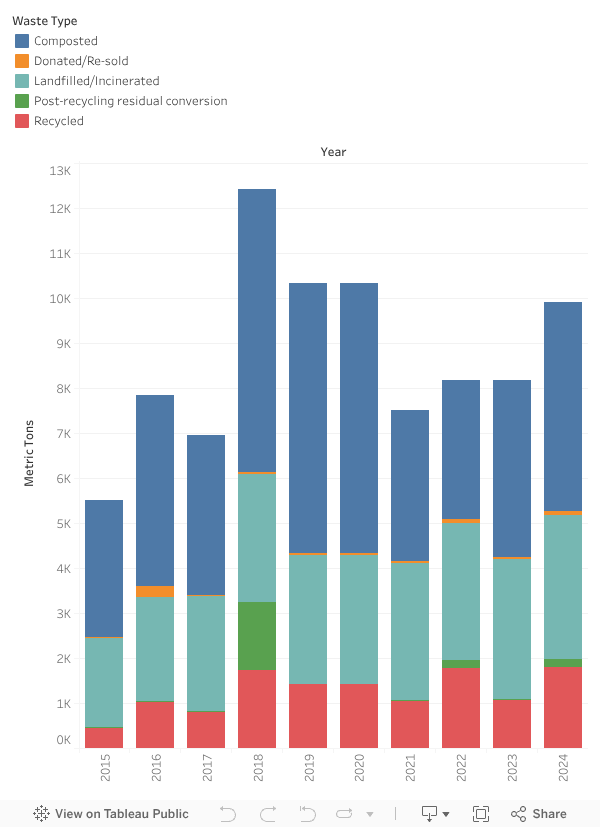
Cornell takes a broad view of campus waste through data reported in STARS and local waste audits. While increasing waste diversion—ensuring materials are sorted into the correct recycling, compost, and landfill streams—is important, our highest priority is reducing consumption in the first place. This aligns with the familiar "reduce, reuse, recycle" hierarchy and supports programs like Dump & Run that extend the life of products.
To strengthen this effort, we are exploring ways to connect waste diversion with purchasing practices. For example, data from Cornell Dining shows the volume of disposable coffee cups used, while waste audits reveal the number that end up in landfill. Similarly, audits show how many bottled waters are purchased and discarded, highlighting opportunities to shift purchasing behavior toward reusables.
Pairing procurement data with waste audits can help raise awareness about the direct link between what we buy and the waste we create, encouraging more sustainable choices campus-wide.