
Greenhouse Gas Inventory
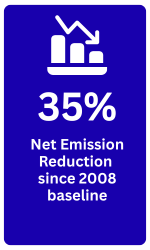
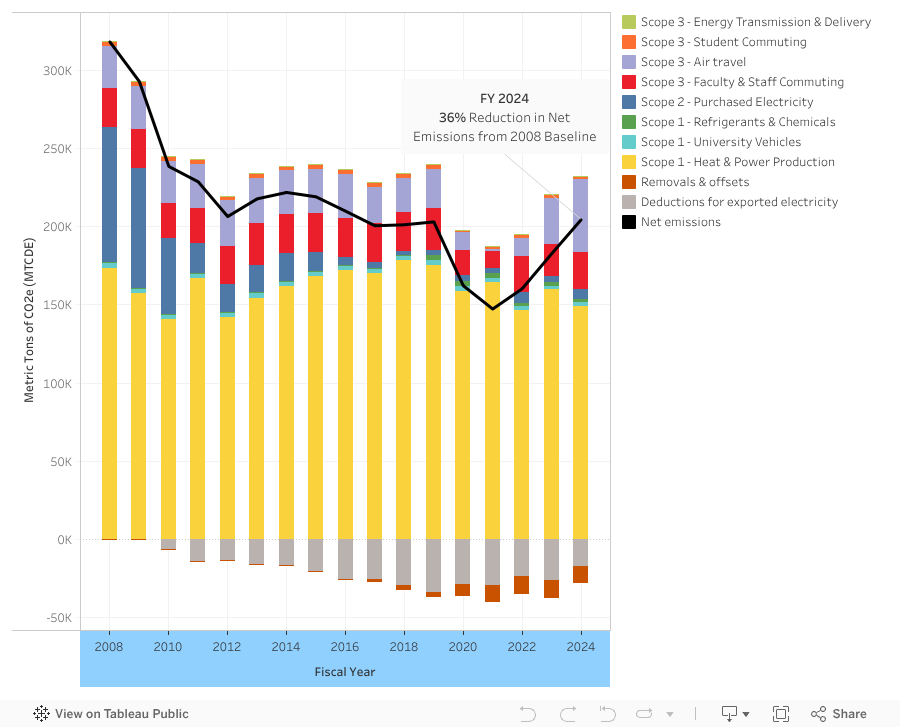
Cornell has made steady progress toward its carbon neutrality goal, achieving a significant reduction in Ithaca campus emissions from 2008 baseline levels measured using the Second Nature and GHG Protocol methodologies. This progress reflects years of planning, investment, and operational changes.
Cornell recognizes that more must be done and is actively pursuing next-generation solutions to close the gap. Most remaining emissions come from generating electricity and heating via Cornell's combined heat and power plant. The path to neutrality will require multidisciplinary innovation and continued commitment by the entire campus community.
Emissions tracking at Cornell
This site presents Cornell University’s tracking of greenhouse gas (GHG) emissions as it pertains to our goal of carbon neutrality following the Second Nature standard for boundaries. This includes direct emissions from on campus sources (Scope 1); indirect emissions from purchased electricity (Scope 2); and indirect emissions from commuting and university funded air travel (Scope 3). These emissions are presented in our Baseline Greenhouse Gas Emissions Inventory, together with the campus’ offsets and removals.
Cornell also tracks certain other indirect emissions in the value chain (Scope 3 emissions). These are presented in the Additional Greenhouse Gas Inventory. Upstream methane emissions from natural gas extraction and delivery processes (a.k.a. fuel and energy related activities - FERA) are not incorporated in the baseline metric. For FERA data and more information, please see our additional inventory.
Baseline inventory | Additional inventory | ||
|---|---|---|---|
| 
| 
| 
|
You will find brief information about methodology, boundaries, the different scopes of emissions, and how Cornell is reducing emissions on these pages. If you want more information, please reach out to the Campus Sustainability Office.
Baseline Inventory
*Note: Learn more about Notable Changes in Reported Greenhouse Gas Emissions
GHG emissions reporting to authorities
In addition, to the annual baseline inventory reporting to Second Nature towards the Carbon Commitment, Cornell also reports emissions to government agencies.
Since 2011 Cornell has reported direct greenhouse gas emissions from combustion sources at Ithaca Campus to the Environmental Protection Agency (EPA) through the Greenhouse Gas Reporting Program (GHGRP, 40CFR Part 98). Note that on September 12, 2025, the EPA proposed to permanently remove the program obligation to report greenhouse gas emissions. This is yet to be determined.
In 2025, New York State Department of Environmental Conservation (NYSDEC) proposed the Mandatory Greenhouse Gas Reporting (Part 253) regulation as part of the implementation of the Climate Leadership and Community Protection Act (Climate Act). This regulation requires certain emitters of GHG emission sources to annually report their emissions and related data to NYSDEC. First reporting year will be 2026. There is a high probability that Cornell will be required to report its emissions under this rule.